-
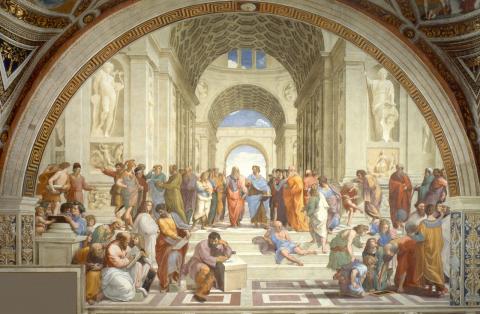
Six Convictions of the Christian Scholar
At the outset of my PhD program, my professor assigned a paper with the topic “faith and scholarship.” Due to the word count limitations, what I’ve posted here never made into the paper I actually submitted. But writing that paper compelled me to think through the convictions that would guide me as I began my…
-

Why God’s Triunity Should Confound our Intellect
Is it possible to arrive at the idea of the Trinity apart from divine revelation? A few philosophical theologians have thought so, including Richard of St. Victor, G. W. F. Hegel, and Richard Swinburne. Richard of St. Victor, followed by Richard Swinburne, argues that “if God is loving, then he must share (hence the Son);…
-
Evangelicalism and Social Responsibility
In the enormous book Tough-Minded Christianity: Honoring the Legacy of John Warwick Montgomery, Vernon Grounds has an essay entitled “Evangelicalism and Social Responsibility.” I found his main points to be helpful, which I quote here: The Church’s primary task is that of personal evangelism. The Church has the responsibility of nurturing and judging the ethos of our…
-
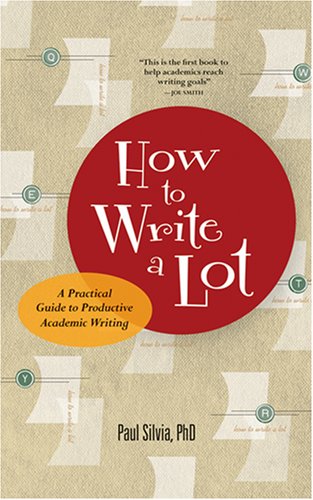
How to Write a Lot: Advice from Paul J. Silvia
For an introductory seminar on academic research, my professor assigned us to read How to Write a Lot: A Practical Guide to Productive Academic Writing by Paul Silvia. In this hard-hitting little book, Silvia sounds like a fierce training coach: if you want results, you’re just going to have to put the time and effort in. Make a writing schedule,…
-

How I Use Evernote to Index Sermon Illustrations
Shortly after I opened up my Evernote account in 2011, I realized it could be a powerful tool for capturing, indexing and retrieving sermon illustrations. Here’s how I do it. First, I use Google Chrome’s Evernote web clipper to capture articles, pictures, or anything think I would serve as a fitting illustration for a particular…
-

Today Is Sunday
Today is Sunday. It’s the first day of the week—the day my Lord rose from the dead. All four Gospels record that Jesus rose from the dead on the first day of the week (Matt. 28:1; Mark 16:2; Luke 24:1; John 20:1). The Romans called this day “the day of the sun” (dies solis) because…
-
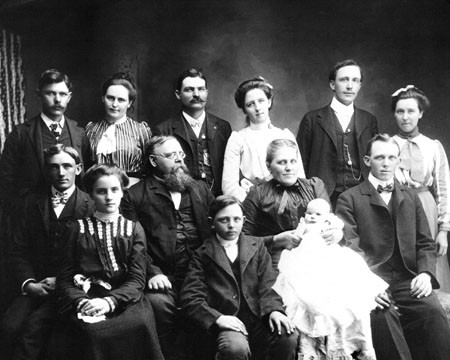
How the Past Has Impacted Parenting
Family life looked much different before the Industrial Revolution. Here’s a brief survey of some cultural and social developments since the 18th century that have impacted current family discipleship (Some of this material is adapted from Ryan Steenburg with Timothy Paul Jones, “Growing Gaps from Generation to Generation,” in Trained in the Fear of God, edited by…
-

Embracing Singleness, Valuing Marriage
As our culture tends to postpone, forego, and even redefine marriage, the church rightly pushes back by stressing God’s plan for marriage and its inherent goodness. But where does this leave single people? There are vast numbers of Christians who, for a variety of reasons, are still single, have become single, and may remain single…
-

Why Are People Taking Longer to Grow Up?
Extended adolescence. It’s something we’ve all heard about, seen, and maybe experienced: people are taking longer and longer to reach adulthood. What is adulthood? They say you’ve reached it when you finally leave home, finish school, become financially independent, get married (and possibly have a kid). In one of his lectures for the class Leadership…
-

Michael Hill on Educating the Conscience
In the concluding chapter of his book The How and Why of Love: an Introduction to Evangelical Ethics, Michael Hill offers practical steps to living a Scripturally moral life. He divides these steps into the two major categories that comprise morality: decision-making and character-development.[1] For moral decision-making, Hill suggests that we (1) start with the…
-
Subscribe
Subscribed
Have a WordPress.com account? Log in now.

