
Don’t get me started on the strings I had to pull to make this happen. I’m not very well connected, and it’s hard enough to get a group of living people together.
But a group of dead men!—that’s another thing altogether.
Still, when the proposed topic is interesting enough, and when the invitees are unified in their concern about it, you’d be surprised at the eagerness with which they start checking their calendar to see what they can clear.
Many of my guests, it’s true, found it difficult at first to grasp the topic. I had to describe it again and again—in several different languages, mind you—to make them understand what it was. (Some were convinced at first that I was describing a kind of demon. I still wonder whether I successfully dissuaded them.) Eventually, however, most grasped it sufficiently to see the urgency of the matter, and the replies began pouring in:
“I accept with pleasure!”
“C’est avec grand plaisir!”
“Graag!”
“Veniam!”
Soon my list of confirmed guests included such deceased luminaries as Tim Keller, R. C. Sproul, Martin Lloyd-Jones, Francis Grimké, Herman Bavinck, Alexander Maclaren, Charles Spurgeon, Robert Murray M’Cheyne, Jonathan Edwards, Richard Baxter, John Calvin, Martin Luther.
Word about the symposium spread quickly. Soon a dozen or so people whom I hadn’t invited (I’ll withhold their names) sent notes declaring their intention to attend as well.
There were so many that I began to worry. Could I find a venue with a large enough conference table? How would I get enough coffee and snacks? Would some of the participants try to settle old disputes? Then another worry began to dawn on me: with the different languages represented, would we have a Tower of Babel experience?
As it turned out, I should have been anxious for nothing.
A nearby hotel was more than happy to provide the venue and snacks. The coffee intake was minimal: Edwards didn’t drink coffee—and persuaded several others to refrain as well. Luther cared only for Bavarian beer. Spurgeon was content to inhale through his cigar.
As for the Babel problem, it is true that Calvin and Luther spoke Latin but not English; and my modern American and British guests—MacArthur, Keller, and Lloyd-Jones—spoke English but not Latin. But Richard Baxter spoke both Latin and English, and thus could translate for the non-Latin English speakers and the non-English Latin speakers. (Besides, with their natural affinity for languages, Luther and Calvin quickly picked up on English and by the end of the meeting were fluent enough to begin correcting the Americans’ grammar.)
The Symposium Begins
At the appointed time, the men gathered into the conference room, found their seats (assigned: I arranged them chronologically), and I began to call the meeting to order. The room was much noisier and smokier than I had expected.
“Brothers and fathers, may I have your attention!” I shouted. The roar of voices—including rowdy guffaws from Luther—melted into a manageable murmur.
“We are here to discuss a matter facing those of us living in the year of our Lord two-thousand and twenty-six,” I began. “An invention called artificial intelligence—intelligentia artificialis—is being used by preachers to produce sermons. As explained in the invitations you received, a preacher need only enter a prompt such as this:”—I began typing on my laptop connected to a large monitor—“Generate a sermon on Mark 1:1-3 with the homiletical flow of Tim Keller, the relentless pungency of Richard Baxter, the heart-healing cadences of Charles Spurgeon, within the theological framework of Herman Bavinck. Include an introduction and conclusion that connects with the experience of 21st century Americans.”
I opened my Bible to Mark 1, tapped “send,” and the words began flowing on the screen. The silence was palpable as the men took this in.
“But this is not the only use of AI,” I explained. “It may be used for research, to give ideas for illustrations, to aid in lexical and exegetical study of the text, or to give ideas for practical application.”
I paused and surveyed their sober faces. My question is, “How do you evaluate the use of this technology for pastors in their sermon preparation?”
Whispers went through the assembly. Lloyd-Jones leaned across the table toward Edwards. Keller exchanged glances with Sproul. Calvin and Luther—momentarily forgetting their disagreement over the Lord’s Supper—muttered to each other in Latin.
Finally, a hand went up. It was Charles Spurgeon’s.
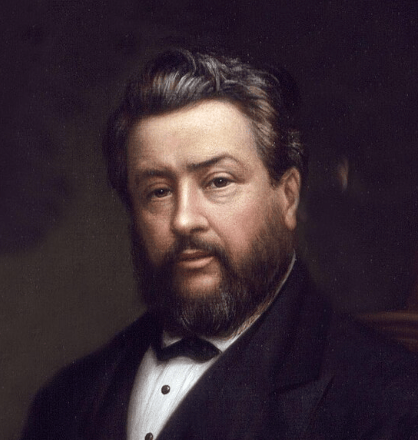
If we have not thought,
how shall we lead others to think?
– Charles Spurgeon
“If I may,” began the Prince of Preachers, rising from his chair. “I would ask wherein such a preacher thinks lies the power of his preaching. In the outline? In the mimicry of another preacher? In the force of his logic? The ornamentation of his rhetoric? He asks this intelligentia artificialis to think for him, but
If we have not thought, how shall we lead others to think? It is in our study-work, in that blessed labour when we are alone with the Book before us, that we need the help of the Holy Spirit. He holds the key of the heavenly treasury, and can enrich us beyond conception . . . If you study the original, consult the commentaries, and meditate deeply [or, for that matter, use AI] yet if you neglect to cry mightily unto the Spirit of God your study will not profit you. (Lectures to My Students)*
A ripple of appreciation spread through the assembly as Baxter translated for the Reformers. I looked over at Luther. To my horror, he had pulled a dagger from his belt, and was etching something into the mahogany conference table. I began mentally calculating how much this symposium was going to cost me.
Another hand went up, and I recognized the Scottish Baptist minister Alexander Maclaren.
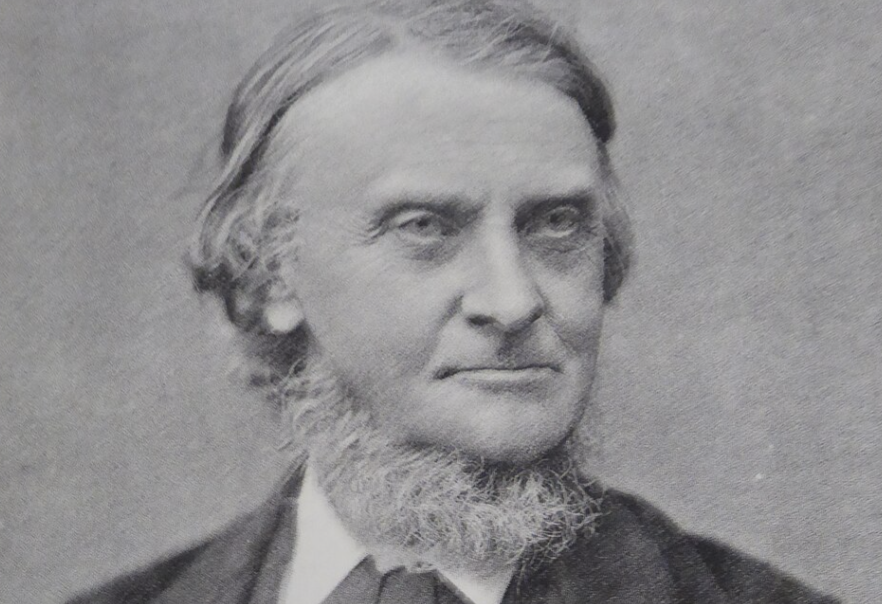
The effectiveness of my preaching
is in direct proportion to the depth
of my daily communion with God.
– Alexander Maclaren
Maclaren stood up. “I broke with Charles Spurgeon over the sad Downgrade Controversy, and for that, my brother”—he looked at Spurgeon—“I am now deeply sorry. But had the use of artificial intelligence in preaching blighted our generation, Charles and I would have been in agreement, for
I have found that my own comfort and [effectiveness] in preaching have been in direct proportion to the depth of my daily communion with God. I know no way in which we can do our work but in fellowship with God, in keeping up the habits of the student’s life, which needs some power of saying, ‘No’ and by conscientious pulpit preparation. The secret of success is trust in God and hard work. (The Company of the Preachers, vol. 2).
A fraternal embrace between Spurgeon and Maclaren followed this statement, and Lloyd-Jones wiped tears of joy from his eyes. Luther continued to decorate the table with his carving tool.
“I remind our guests,” I announced loudly, “that NO ALTERATIONS MAY BE MADE TO THE FURNITURE assembly hall! Any messages to be shared must be shared in speaking, NOT writing—either on paper or carved on the table.”
Baxter translated.
Luther continued etching.
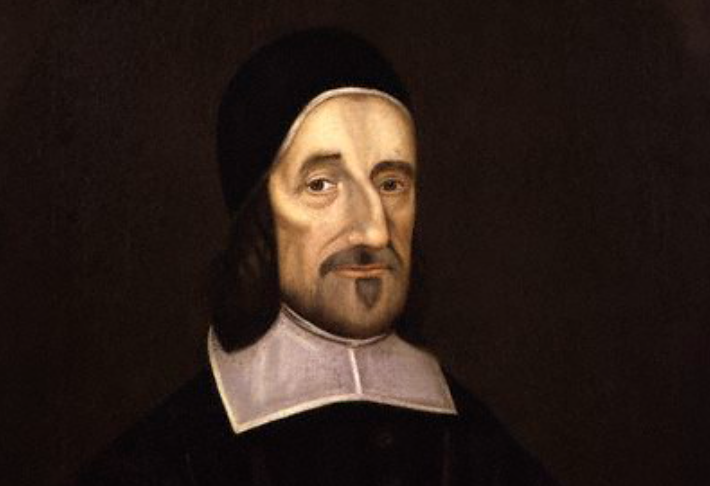
If it be not your daily business to study your own hearts and walk with God—if you make not this a work to which you constantly attend, all will go wrong.
– Richard Baxter
“I must speak,” thundered Richard Baxter suddenly, rising from his seat. “Can this new invention—intelligentsia artificialis—teach a man to have reverence in his preaching? Can it communicate to a man the very presence of God?
All our work must be managed reverently, as beseemeth them that believe the presence of God, and use not holy things as if they were common. Reverence is that affection of the soul which proceedeth from deep apprehensions of God and indicateth a mind that is much conversant with him. (The Reformed Pastor)
He paused and looked into the eyes of the men around the table.
I know not how it is with [you], but the most reverent preacher, that speaks as if saw the face of God, doth more affect my heart, though with common words, than an irreverent man with the most exquisite preparations. Yea, though he bawl it out with never so much seeming earnestness, if reverence be not answerable to fervency, it worketh but little. . . . We should, as it were suppose we saw the throne of God, and the millions of glorious angels attending him, that we may be awed with his majesty when we draw hear him in holy things, lest we profane them and take his name in vain. (The Reformed Pastor)
“Moreover,” Baxter cried out, “the purpose of preparing a sermon is not merely to produce a script to read out, but also to put yourself in a holy, heavenly frame. Your people will
likely feel when you have been much with God: that which is most on your hearts is like to be most in their ears. I confess I must speak it by lamentable experience, that I publish to my flock the distempers of my own soul. When I let my heart grow cold, my preaching is cold; and when it is confused, my preaching is confused. (The Reformed Pastor)
The room grew still, and we could see tears in Baxter’s eyes. His continued in a whisper, but a whisper that moved us like an earthquake.
If it be not your daily business to study your own hearts, and to subdue corruption, and to walk with God—if you make not this a work to which you constantly attend, all will go wrong, and you will starve your hearers; or, if you have an affected fervency, you cannot expect a blessing to attend it from on high. Above all, be much in secret prayer and meditation. For your people’s sake, therefore, look to your hearts.
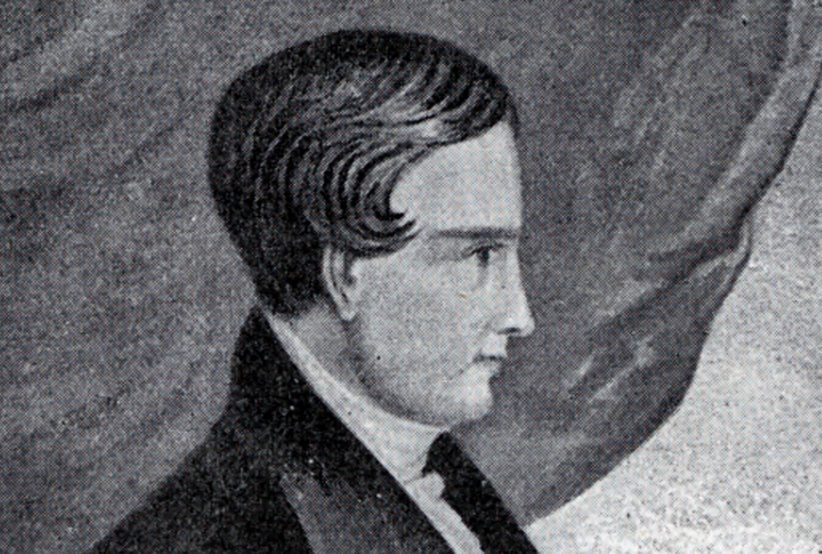
It is not great talents God blesses
so much as great likeness to Jesus.
– Robert Murray M‘cheyne
There was a solemn silence. Finally, a pale young man stood up. It was Robert Murray M‘cheyne.
“Brothers, I could not agree more,” said the Scottish Presbyterian youth. “This artificial intelligence, impressive as it is, allows a man to produce a sermon that costs him virtually nothing. My years of ministry were few—not even seven—but they were abundantly blessed by God. I was always anxious to give my people the fruit of my labor, not the rubbish of my laziness—and, by God’s grace, never went before them without much meditation and prayer. My principle on the subject may be found in the instructions for the preparation of the oil for the sanctuary: “Beaten oil—beaten oil for the lamps of the sanctuary.” (adapted from Memoir and Remains of Robert Murray M‘Cheyne)
“So to any man considering how to preach and minister well, I would say:
Remember you are God’s sword—His instrument—I trust a chosen vessel unto Him to bear His name. In great measure, according to the purity and perfections of the instrument, will be the success. It is not great talents God blesses so much as great likeness to Jesus. (Memoir and Remains of Robert Murray M‘Cheyne).
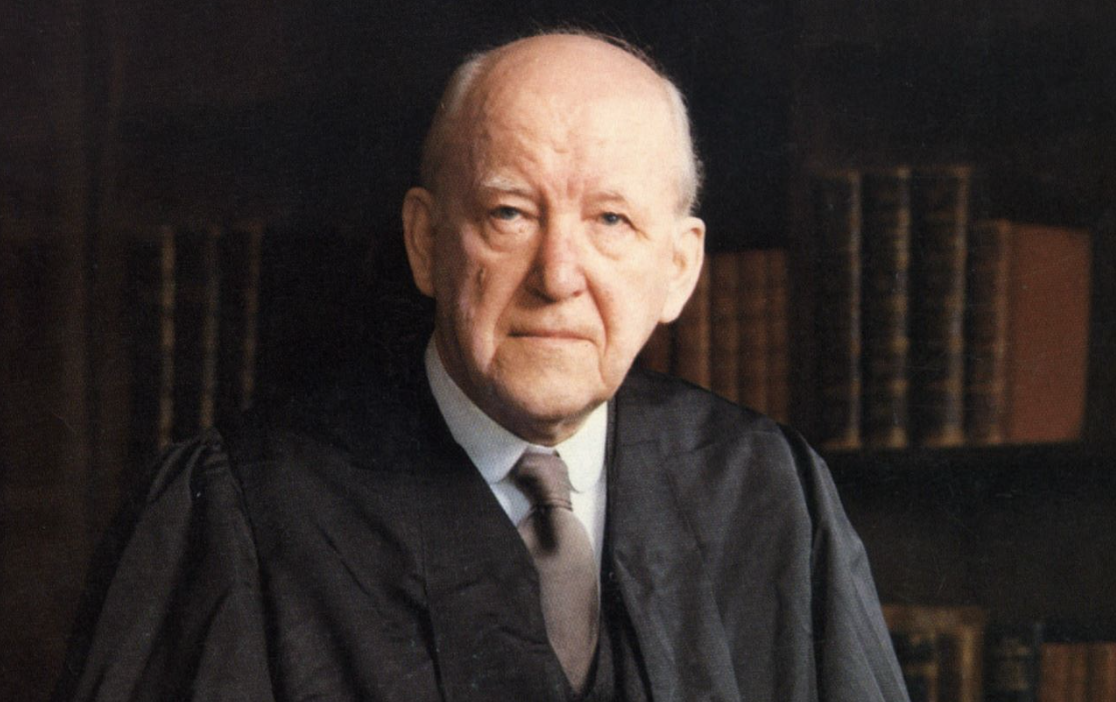
Preaching is theology coming
through a man who is on fire.
– Martyn Lloyd-Jones
Martyn Lloyd-Jones nodded and raised his hand. I acknowledged the reverend doctor, and he stood slowly. “Having heard now from two Englishmen, and two Scotsmen, I thought it would be fitting for the Welsh to have a voice.” His eyes twinkled with merriment, and Keller looked delighted. “Regarding the question of the proper use of this artificial intelligence, I have just one question: what is preaching?
Any true definition of preaching must say that [the preacher] is there to deliver the message of God, a message from God to those people. . . . He is there to deal with the whole person; and his preaching is meant to affect the whole person at the very center of life. . . . [It] should always be a transaction between preacher and listener with something vital and living taking place. It is not the mere imparting of knowledge; there is something much bigger involved. The total person is engaged on both sides, and if we fail to realise this our preaching will be a failure. (Preachers and Preaching)
What is preaching? Logic on fire! Eloquent reason! . . . Preaching is theology coming through a man who is on fire. (Preachers and Preaching)
“I wonder: can a man, who does not engage in the arduous practice of praying over and studying a text—letting God pummel him with the truth, squeezing out of him tears of repentance and gratitude—can such a man truly stand before his people and convey to them a sense of God’s presence?”
I can forgive a preacher almost anything if he gives me a sense of God, if he gives me something for my soul, if he gives me the sense that, though he is very adequate himself, is handling something which is very great and very glorious. (Preachers and Preaching)
As Lloyd-Jones was sitting down, Tim Keller was standing, positively beaming. “Dr. Lloyd-Jones,” he whispered, “Your preaching ministry has profoundly shaped mine, and I have listened to every one of your sermons I could find.”
Lloyd-Jones shook his head and looked disapprovingly.
“I can say quite honestly that I would not cross the road to listen to myself preaching.” (Preachers and Preaching).
he responded, and the room exploded with hearty laughter.
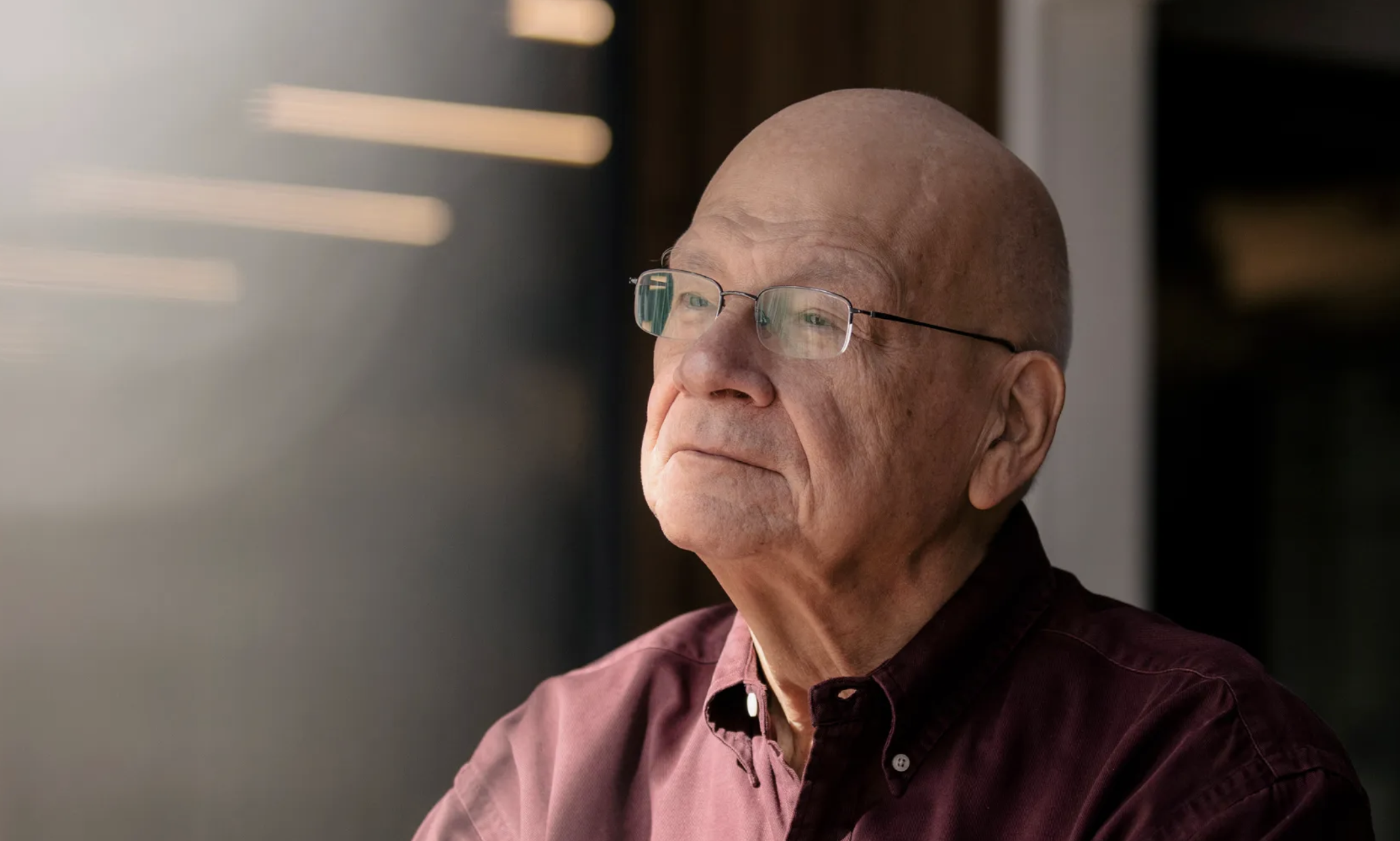
If you want to preach to the heart,
you need to preach from the heart.
– Tim Keller
“What I have to say,” Keller continued, “is mostly what I have learned from many of you.”
The difference between good preaching and great preaching lies mainly in the work of the Holy Spirit in the heart of the listener as well as the preacher. (Preaching: Communicating Faith in an Age of Skepticism)
“Artificial intelligence might give you a better sermon, but it cannot produce better preaching. This is because
If you want to preach to the heart, you need to preach from the heart. It’s got to be clear that your own heart has been reached by the truth of the text. This takes non-deliberate transparency. Heart-moving preachers (in contrast to heart-manipulating ones) reveal their own affections without really trying to. What is required is that as you speak it becomes evident in all sorts of ways that you yourself have been humbled, wounded, healed, comforted, and exalted by the truths you are presenting, and that they have genuine power in your life. (Preaching)
“Is this achievable by using artificial intelligence to generate your outline, applications, and illustrations?” No—
There’s no way to convey this . . . through technique; it comes down to your spiritual life as a preacher. Are you ‘sensing Christ on your heart’ as you preach? Are you, in a way, meditating and contemplating him during the very act of preaching? Are you actually praising him as you talk about his praiseworthiness? Are you actually humbling yourself as you talk of your sin? The answer will be very evident to any attentive listener. And these things will happen in your preaching only if you are regularly cultivating them during routine prayer and meditation, beyond the task of sermon preparation. (Preaching)
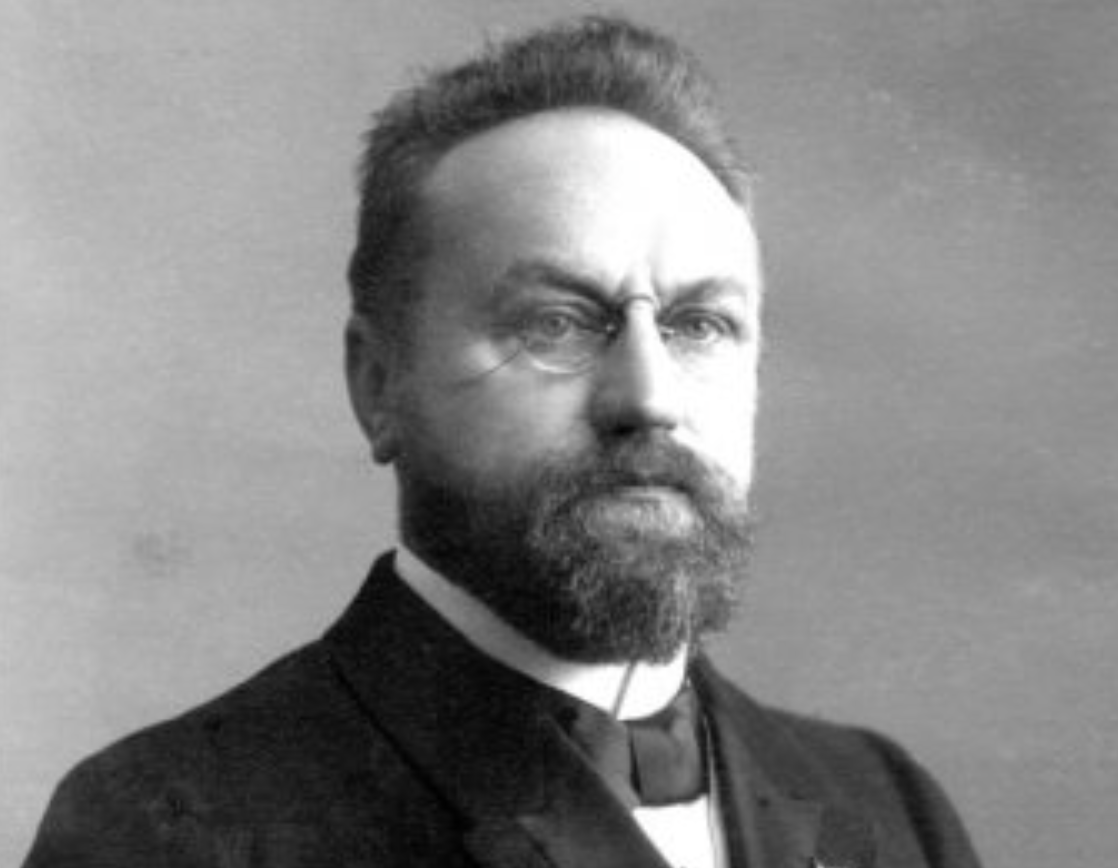
In order to speak well,
one must live well.
– Herman Bavinck
My favorite Reformed theologian, Herman Bavinck, had been listening attentively. Not a native English speaker, he had to concentrate hard to understand what was being said. The words of the American preacher, Tim Keller, had greatly interested him, and he was bursting with eagerness to speak. I gratefully acknowledged him.
“I am not in the least surprised,” he began after rising to his feet, “to learn that artificial intelligence is being so readily appropriated by so many American preachers. After all, during my visit to America in 1892, I noted that
As regards religious life, it is beyond doubt that [America’s moralistic, optimistic, deistic, and experience-led culture] leads to great superficiality. . . Preaching [in America] is not the unfolding and ministering of the word of God; rather, it is a speech, and the text is simply a hook. . . Religion there is an amusement. The preacher is the most in-demand [person], who knows how to speak in the most exciting way (short, varied, lively, theatrical) . . . spirited but shallow, enjoyable, peppered with humor. (Herman Bavinck on Preaching and Preachers)
“After a hundred and thirty years, therefore, my only surprise is that Americans did not invent artificial intelligence sooner, and that there is any caution at all among Americans about using it for sermon preparation. Much of what needs to be said has been said already. I will comment only on the character of true eloquence in preaching. If it be thought that artificial intelligence can produce good preaching, preachers should understand that
this preference for form . . . soon crosses over into lying, which is love for the opposite of being, for idle nothingness. . . . By paying attention to its opposite, its caricature, the real principle of true eloquence comes into its own! The root of idle words lies in the preference for the facade. . . . A person shall be eloquent, thus, if his word once again becomes the bearer of godly content . . . In order to speak well, one must live well. (Herman Bavinck on Preaching and Preachers)

“One must go into the wilderness.”
-Martin Luther
Bavinck sat down, and the men looked around. Could more be said? Martin Luther blew the wood shavings away, and stabbed the knife into the table. He gazed in satisfaction at what he had carved:
In desertum ire oportet.
How I regretted my poor Latin! “What does it say?” I whispered to Baxter. “One must go into the wilderness,” Baxter replied.
“Yes,” Luther began, his words interpreted by Baxter. “Into the wilderness.”
No one is taught through much reading and thinking. There is a much higher school where one learns God’s Word. One must go into the wilderness. Then Christ comes and one becomes able to judge the world. (Quoted in Here I Stand)
“But what does this mean?” I asked.
“Intelligentsia artificialis is not the wilderness,” Luther said, “It is a box. In it are held the thoughts of men—some good, some bad—echoing back and forth. In it you may hear your own voice, or the voice of others, or even the voice of God. But in this box you do not suffer privation or learn patience or cry unanswered. It is in the wilderness that you suffer. You wait. You cry. You listen. In the wilderness Moses saw the burning bush. In the wilderness God fed his people with manna. In the wilderness he appeared to them in fire and smoke. In the wilderness Elijah was fed by ravens. In the wilderness is heard a voice crying, ‘Prepare the way of the Lord.’ Then the wilderness becomes a garden. In place of the brier comes the myrtle; in place of the thorn comes the cypress. A sermon is not prepared in a box, but in the wilderness. And there one must go.”
I was desperately hoping that I would hear Luther say, “Hier stehe ich, ich kann nicht anders—Here I stand, I can do no other,” but it was evident that his speech was over, for even though he remained standing, he continued in silence.
“Translated word-for-word,” Baxter declared, and he too stood up. Then so did Bavinck, and Keller, and Lloyd-Jones, and all the rest. They began turning toward each other, talking with one another loudly and merrily.
“Fathers and brothers!” I shouted. “We have much more to discuss! We still haven’t heard from MacArthur, Grimké, Edwards, or Calvin!”
But they seemed deaf to me, as they took their last gulps of coffee and brushed crumbs from the table.
The Reformers were discussing the Lord’s Supper. Spurgeon and Maclaren reminisced about preaching in the Victorian age. Keller was asking Bavinck whether he would have liked to move to New York City. Lloyd-Jones and Grimké were sharing a joke I couldn’t hear. And Sproul was asking Edwards, “What’s wrong with these people?”
They all began moving toward the exit, engrossed in their conversations.
I wanted to follow them and ask about eschatology, and predestination, and Michael Servetus, and the pope, and the Enlightenment, and the Downgrade debacle, and dispensationalism. But I knew I couldn’t.
“Gentlemen!” I called once more. Only Spurgeon—the last to pass through the door—seemed to hear me, and he gave me a parting wink and smile.
The room, once rowdy and full, was suddenly quiet and empty.
And I was alone with my Bible and the words “In desertum ire oportet” etched into the mahogany.
*All indented material indicates direct quotations. The title from which the quote is taken is indicated in parentheses following the quotations.
**All media is taken from Wikipedia, except the featured image, which is from https://www.custom-conference-tables.com/large-conference-table/ and the photo of Tim Keller, which was taken from The New Yorker.
***AI was never used in any phase of this post, including imagining, editing, or refining the ideas.
 Jonathan M. Threlfall