
Pinocchio
by Carlo Collodi

Let’s get one thing straight right away: there are important differences between the Pinocchio of Carlo Collodi and the Pinocchio of Disney’s 1940 animated film.
In telling the story of a wooden toy that comes to life and eventually becomes a real boy, Collodi shows what it means to be a mature human being, open to change and embracing responsibility, instead of a “puppet” bound by the strings of laziness, gullibility, and dishonesty. He shows that the path to maturity often comes through painful self-inflicted trials, and that tears are often the first sign of life.
I was so moved by some passages, that I underlined and wrote in the margin, forgetting that I was borrowing my son’s copy!
There are some bizarre twists and turns in this story, and the ending comes across as stiffly moralistic. Still, it’s a fascinating tale, and offers profound insights into human nature.
“You cannot grow,” replied the Fairy.
“Why?”
“Because puppets never grow.
They are born puppets, live puppets, and die puppets.”
“‘When the dead person cries,
it is a sign that he is on the road to get well,’
said the Crow solemnly.”
– Carl Collodi
Everything Sad Is Untrue
by Daniel Nayeri

It might be hard to resist the logic of a grownup who’s trying to convince you of something. It’s another thing entirely to argue with a self-effacing, honest pre-teen boy who is just telling his story.
That’s what makes this book so powerful. Nayeri disarms his readers by using the voice of his 12-year-old self to recount his experiences as an upper-class Iranian refugee who ends up in a low-income region of Oklahoma.
For a book written from a child’s perspective, Everything Sad Is Untrue touches on a range of profound and serious topics, including family abuse, discrimination, and shame.
“Love is empty without justice.
Justice is cruel without love. . . .
God should be both.
If a god isn’t, that is no God.”
“Dear reader, you have to understand the point of all these stories. What they add up to. Schererazade was trying to make the king human again. She made him love life by showing him all of it, the funny parts about poop, the dangerous parts with demons, even the boring parts about what makes marriages last.”
“Little by little, he began to feel
the joy and sadness of others.
He became less immune, less numb,
because of the stories.”
– Daniel Nayeri
The Spirit of the Disciplines
by Dallas Willard
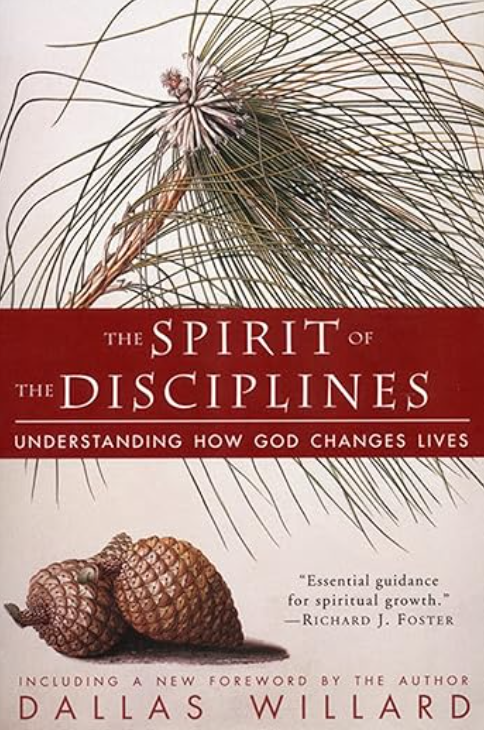
Although it was first published in 1988, there’s a lot about The Spirit of the Disciplines feels up-to-date and fresh.
Willard believes that Christians seriously sabotage their experience of life with Christ when they neglect to actually imitate of Christ through character-shaping practices.
I read this book over the summer of 2024, and assigned it for a pastoral training program in the fall. One of the men who read it said it changed his life. It might change yours too.
“Full participation in the life of God’s Kingdom and in the vivid companionship of Christ comes to us only through appropriate exercise in the disciplines for life in the spirit. Those disciplines alone can become for average Christians “the conditions upon which the spiritual life is made indubitably real.”
“The disciplines are activities of mind and body purposefully undertaken, to bring our personality and total being into effective cooperation with the divine order. They enable us more and more to live in a power that is, strictly speaking, beyond us, deriving from the spiritual realm itself, as we ‘yield ourselves to God, as those that are alive from the dead, and our members as instruments of righteousness unto God.’”
– Dallas Willard
A Secular Age
by Charles Taylor
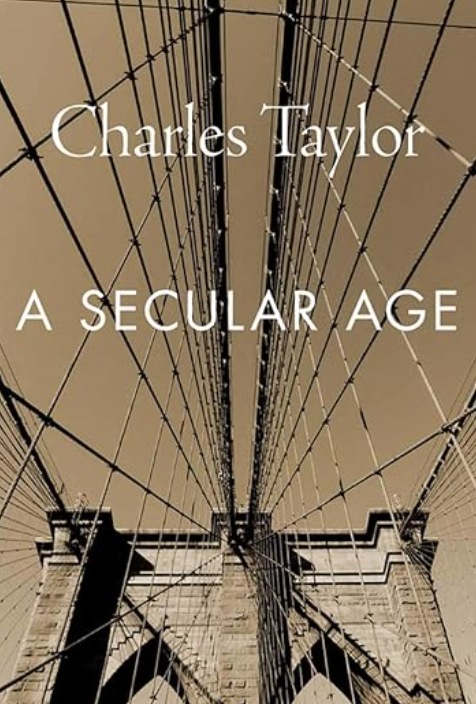
Reading this book was a challenging task, but an important one. I hope to re-read the book, or at least significant sections of it.
In this 800-plus page tome, Taylor seeks to tell the story of western secularization. He asks why and how we moved from a place and time in which belief in God was the only plausible option (1500s) to a place in which belief in God is one of many seemingly plausible options for human fullness.
An important feature of Taylor’s work, and why it is so interesting to me, is his persistent questioning of the common explanation that belief in God declined as it became less necessary, as the “God of the gaps” was made irrelevant by scientific and technological progress. The story of secularization, argues Taylor, is far more complicated than that.
“My problem with this [over-simplistic] story [of secularization] is that it tells how one theory displaced another; whereas what I’m interested in is how our sense of things, our cosmic imaginary, in other words, our whole background understanding and feel of the world has been transformed.”
“The change I want to define and trace is one which takes us from a society in which it was virtually impossible not to believe in God, to one in which faith, even for the staunchest believer, is one human possibility among others.”
– Charles Taylor
Orthodoxy by G. K. Chesterton
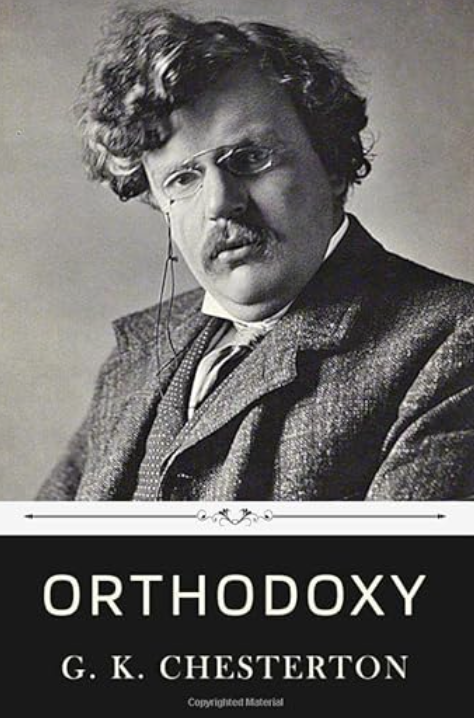
Unlike Charles Taylor (with all due respect), Chesterton is fun to read. His big personality shines on every page. He is simultaneously serious and hilarious, bombastic and self-effacing.
He’s rightly famous for his quotable quips, surprising turns of phrases, and pleasing symmetry of sentences.
Don’t expect a book that proceeds with tidy orderliness. Chesterton himself admits that Orthodoxy is a “chaotic volume.” He wrote it as an answer to a challenge based on a previous book, Heretics. His challenger noted that Chesterton hadn’t given a full account of what he (Chesterton) actually believed. In response, Chesterton sets forth Christian orthodoxy as an adventure that fulfills humans’ double need for the familiar and unfamiliar—the very thing we need that we never would have expected.
“Perhaps God is strong enough to exult in monotony. It is possible that God says every morning, ‘Do it again’ to the sun; and every evening, ‘Do it again’ to the moon. It may not be automatic necessity that makes all daisies alike; it may be that God makes every daisy separately, but has never got tired of making them. It may be that He has the eternal appetite of infancy; for we have sinned and grown old, and our Father is younger than we.”
“The men who really believe in themselves are all in lunatic asylums.”
“Love is not blind; that is the last thing that it is. Love is bound; and the more it is bound the less it is blind.”
“And as I close this chaotic volume I open again the strange small book from which all Christianity came; and I am again haunted by a kind of confirmation. The tremendous figure which fills the Gospels towers in this respect, as in every other, above all the thinkers who ever thought themselves tall.”
– G. K. Chesterton
Reformed Ethics: Created, Fallen, and Converted Humanity by Herman Bavinck

Reformed Ethics sets forth the nature of the Christian life, and I’ve found it excellent for helping me understand the dynamics of spiritual growth, pathologies of the Christian life, and historical perspectives on what it means to be a spiritual person.
Based on a long-lost manuscript of Bavinck’s lecture notes, Reformed Ethics is not light reading, but it is well worth the effort.
“Sin consists concretely in placing a substitute on the throne. That substitute is not another creature in general, not even the neighbor, but the human self, the ‘ego’ or ‘I.’”
“The organizing principle of sin is self-glorification, self-divination; stated more broadly: self-love or egocentricity.”
– Herman Bavinck
Spiritual Theology by Simon Chan
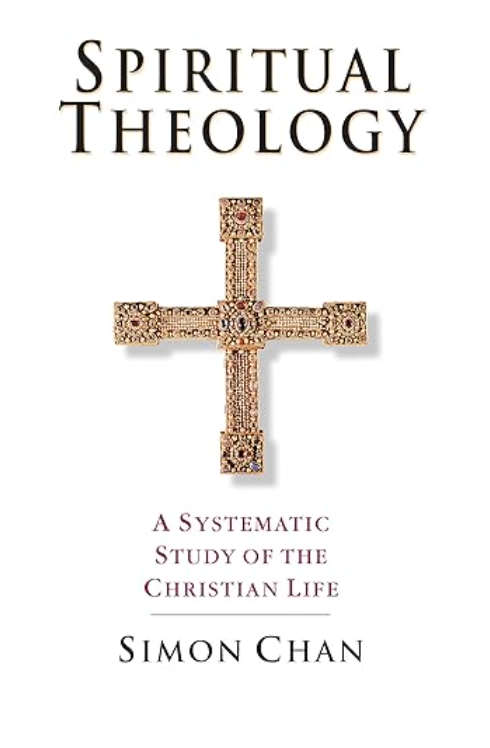
I read this book while on a month-long sabbatical, and loved it. Chan’s Spiritual Theology is valuable for incorporating theological perspectives from both east and west, pentecostal and reformed.
Chan helpfully notes and critiques the lack of coherence in evangelicalism’s approach to spirituality, stemming, perhaps from the “fear that the means might become ends in themselves and might be turned into a form of works righteousness.”
Some have suggested that spiritual formation is shaping up to the be next wave in evangelicalism. If so, I think it’s all the more important to have a firm grasp on a systematic theology of Christian spirituality, and Simon Chan provides an excellent starting point.
We are not primarily concerned about a phenomenological description of spirituality but about truth—as faithfulness to the “given” that defines the Christian community . . . . This given is the Christian story revolving around the life, death, and resurrection of Jesus of Nazareth. It is this story that gives shape to our lives and defines the nature of our existence as a Christian community.
– Simon Chan
A Brief History of Thought
by Luc Ferry
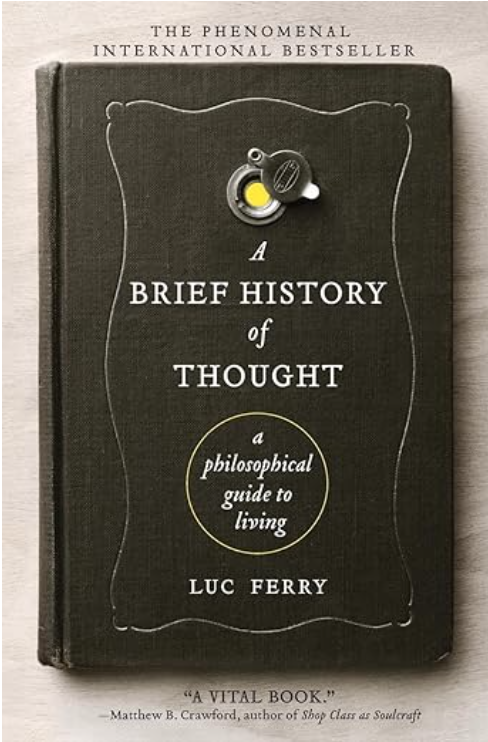
Of all the books I read this year, this one stimulated the most thought and reflection for me. I’ve already started re-reading it.
Both the title and subtitle are, in my opinion, a bit misleading. The book is really an overview of five main streams of thought: Stoicism, Christianity, humanism, post-modernity, and a philosophy in the wake of deconstructionism.
Ferry defines philosophy by contrasting it with religion. (Ferry uses the word “religion” but almost always means “Christianity.” Bear this in mind if you intend to read it). According to Ferry, both philosophy and Christianity have a common goal: to save humans from the fear of death: philosophy by the use of autonomous reason, and Christianity by the claim that death has actually been defeated.
Ferry is not a Christian, but his insights have helped me understand and appreciate my Christian faith in a much deeper way.
“Here are two forms of wisdom [Buddhism/Stoicism and Christianity], then, two doctrines of salvation, which although opposed in almost every respect, deal nonetheless with the same problem: [death].” . . . I find the Christian proposition infinitely more tempting—except for the fact that I do not believe it.”
“The Greek world was fundamentally an aristocratic world, a universe organized as a hierarchy in which those most endowed by nature should in principle be ‘at the top,’ while the less endowed saw themselves occupying inferior ranks. And we should not forget that the Greek city-state was founded on slavery.
In direct contradiction, Christianity was to introduce the notion that humanity was fundamentally identical, that men were equal in dignity—an unprecedented idea at the time, and one to which our world owes its entire democratic inheritance.”
– Luc Ferry
A Praying Church by Paul Miller

This book challenged my pastor-centric (read: self-centered) view of pastoral ministry. It’s on the list of required reading for my church’s pastoral training program.
I recommend it for all pastors.
“Praying together is not a luxury, nor is it something just for ‘spiritual’ Christians; it’s the very breath of the church.”
“It’s no coincidence that the prayer meeting has declined simultaneously with the rise of secularism, which sees the spiritual world as mere illusion, true for you, but not true for everyone else.”
“Prayer is not a ministry of the church—it is the heart of ministry through which the real, functional leadership of the intimate union of the Spirit of Jesus, formed at the resurrection, operates. . . . Prayer accesses the Spirit of Jesus. He runs the place.”
– Paul Miller
Gospel People: A Call for Evangelical Integrity by Michael Reeves
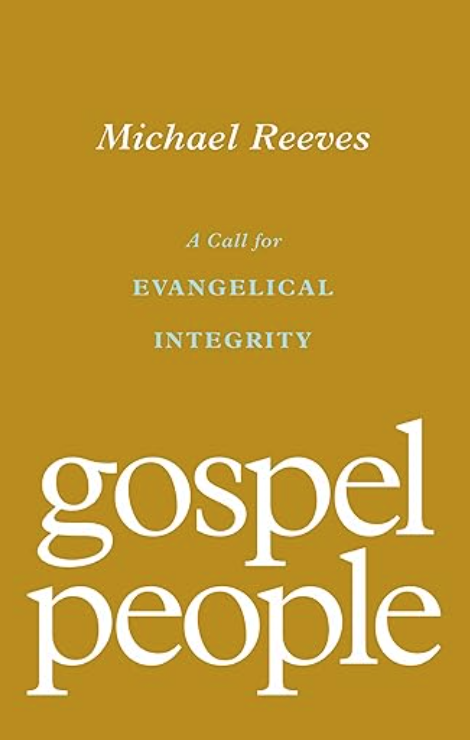
This excellent little volume is a great overview of what it means to be evangelical. Whether the term can resist being coterminous with a political voting bloc remains to be seen.
Reeves “believe[s] that there is a biblical case to be made for the importance and goodness of being evangelical”—not politically, but theologically. Reeves organizes evangelical theology according to a Trinitarian scheme: revelation from the Father, redemption by the Son, and regeneration through the Spirit.
“Evangelicalism . . . must be defined theologically. To be evangelical means to act, not out of cultural or political leanings, but out of theological, biblical convictions. The subject matter of evangelicalism is the gospel, which is known through Scripture.”
“We should not seek to excuse ourselves or gloss over the problems. It runs against the very grain of the gospel we cherish for us to indulge in self-justification. Instead, the evangelical way is not to condone or to feel but to repent and to reform. For evangelicalism, being a gospel movement, is and always has been a renewal movement: we seek to renew ourselves and the church around the gospel. . . . On that reformation hangs the future of evangelicalism.”
– Michael Reeves
 Jonathan M. Threlfall